

Navigating a Noisy Market
We know the headlines have been hard to ignore lately. Markets have been choppy, the news cycle feels relentless, and it’s natural to wonder what it all means for your portfolio. Periods like this can feel uncomfortable, yet they are also a normal part of long-term investing. We want to take a moment to cut through the noise, share what we’re seeing, and most importantly, remind you how important it is to have a plan.
What’s Driving the Volatility
There are three distinct forces at work right now:
- Energy Shock from the Iran Conflict. Geopolitical tensions are pushing energy prices higher, and that has downstream effects. Higher energy costs can pressure supply chains and, if sustained, raise the risk of an economic slowdown. History tells us these shocks do tend to normalize over time, but in the near term, it is a headwind and something we are monitoring.
- AI Disruption in the Software Sector. New AI tools are reshaping entire business models almost overnight. For many software companies that built their value on subscription revenue, this is a moment in time to rapidly adjust. Markets are repricing that uncertainty and volatility reflects just how much is still unknown.
- Weak Jobs Data. Today’s unemployment data came in softer than expected. On its own, one number doesn’t define a trend, but combined with the other pressures above, it added to the market’s unease today. We’ll be watching the next few reports carefully.
A useful reminder: markets have risen through every major conflict in modern history. Volatility is real, but so is long-term resilience.
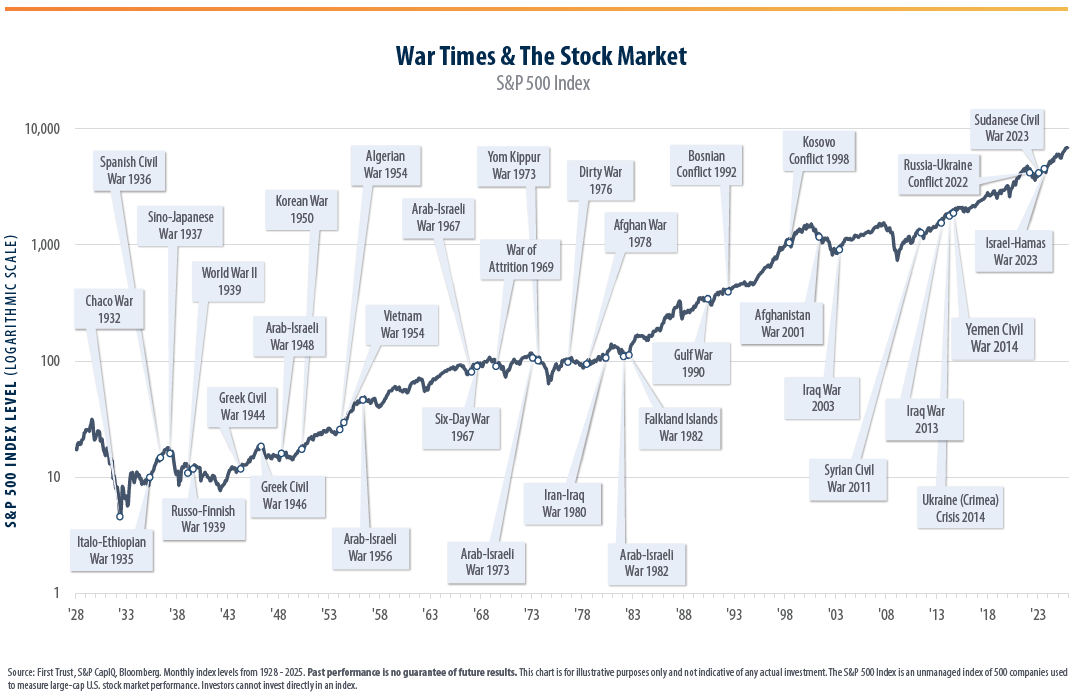
Source: First Trust, S&P CapIQ, Bloomberg. Past performance is not a guarantee of future results.
How Elmwood Is Responding
Here’s how we’re actively managing through this environment:
- Tax-Loss Harvesting. Downturns create silver linings. We’re reviewing portfolios for opportunities to realize losses that can offset future gains, a.k.a. turning short-term pain into long-term tax efficiency.
- Hunting for Dislocated Situations. Volatile markets often misprice quality companies and do not treat all markets equal. Our investment process focuses on identifying assets whose long-term fundamentals remain intact even when short-term headlines drive prices lower. Those are the kinds of opportunities that patient investors have historically been rewarded for.
- Downside-Protected ETFs. Where appropriate, we’re incorporating ETFs with built-in downside buffers. These instruments let us maintain market exposure while helping to mitigate losses. This is useful when volatility is high and the range of outcomes is wide.
- What Investors Should Remember. Perhaps most importantly: we’re not over-reacting. We’re responding. An investment plan should be built to withstand periods like this one, and we’re committed to making decisions based on long-term goals rather than today’s headlines. The portfolios we build are designed with periods like this in mind and are diversified across asset classes, geographies, and economic scenarios. Markets are resilient. Whether the challenge is geopolitical conflict, technological disruption, or economic slowdown, markets historically adapt and move forward.
As always, please don’t hesitate to reach out if you have questions or just want to talk through how any of this applies to your specific situation. That’s exactly what we’re here for.
Warm regards,
The Elmwood Team
DISCLAIMER: Past performance may not be indicative of future results. Different types of investments involve varying degrees of risk, and there can be no assurance that the future performance of any specific investment, investment strategy, or product made reference to directly or indirectly in this newsletter (article), will be profitable, equal any corresponding indicated historical performance level(s), or be suitable for your portfolio. Due to various factors, including changing market conditions, the content may no longer be reflective of current opinions or positions. Moreover, you should not assume that any discussion or information contained in this (article) serves as the receipt of, or as a substitute for, personalized investment advice from Elmwood Wealth Management. A copy of our current written disclosure statement discussing our advisory services and fees is available for review upon request.